Tomatoes
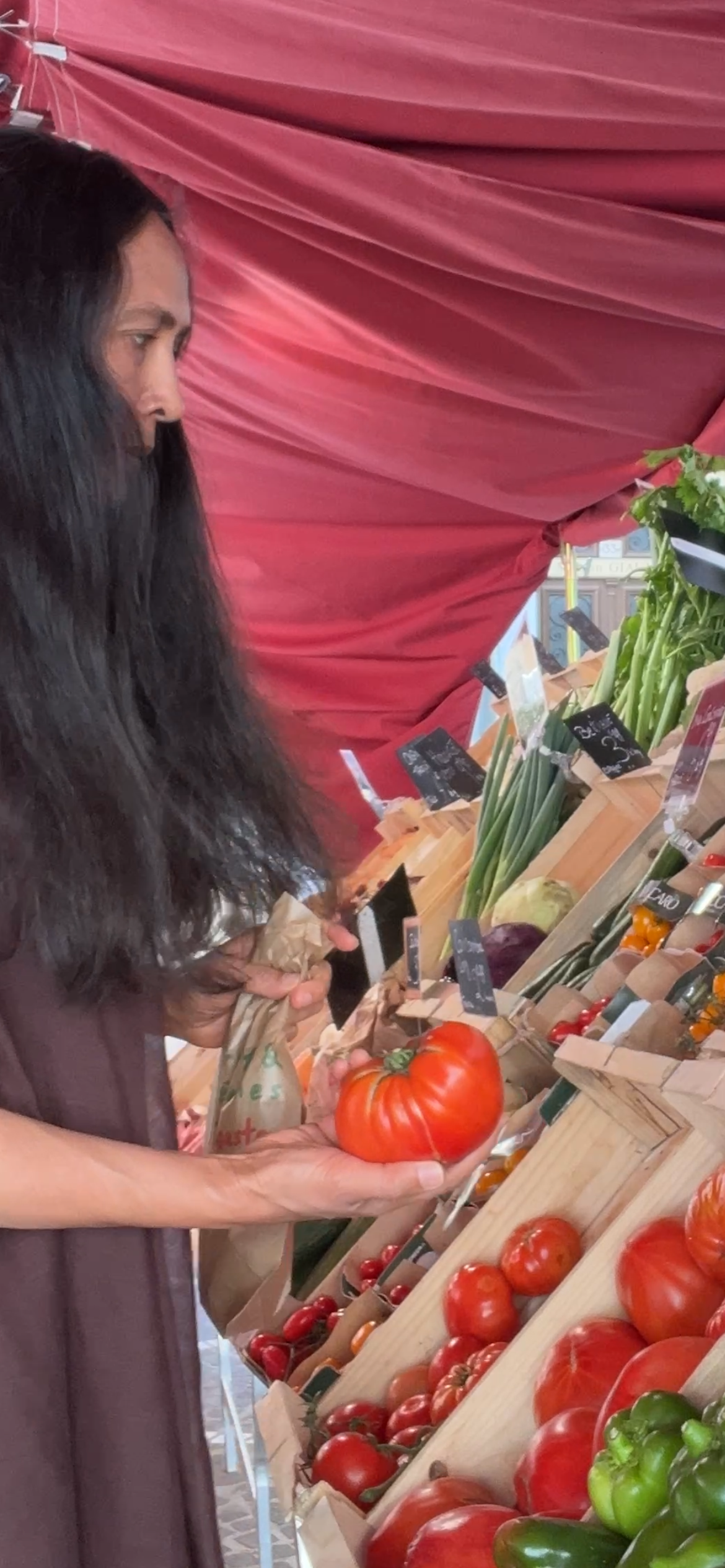
I pick up a tomato at the market and turn it over in my hands.
It is heavier than I thought it would be.
Its shape is uneven, gathered into deep folds around the top, one side fuller than the other. The skin is red, but not evenly so. Near the stem, a little green remains.
I hold it for longer than I need to.
Perhaps choosing food begins before we taste it.
With weight.
Colour.
The feel of skin beneath the fingers.
I lift the tomato closer to my face and smell the place where the stem has been.
That particular green smell is difficult to describe.
Leaf. Vine. Something sharp.
It belongs so completely to tomatoes that I recognise it before I have found the word for it.
Around me, the market is full of colour.
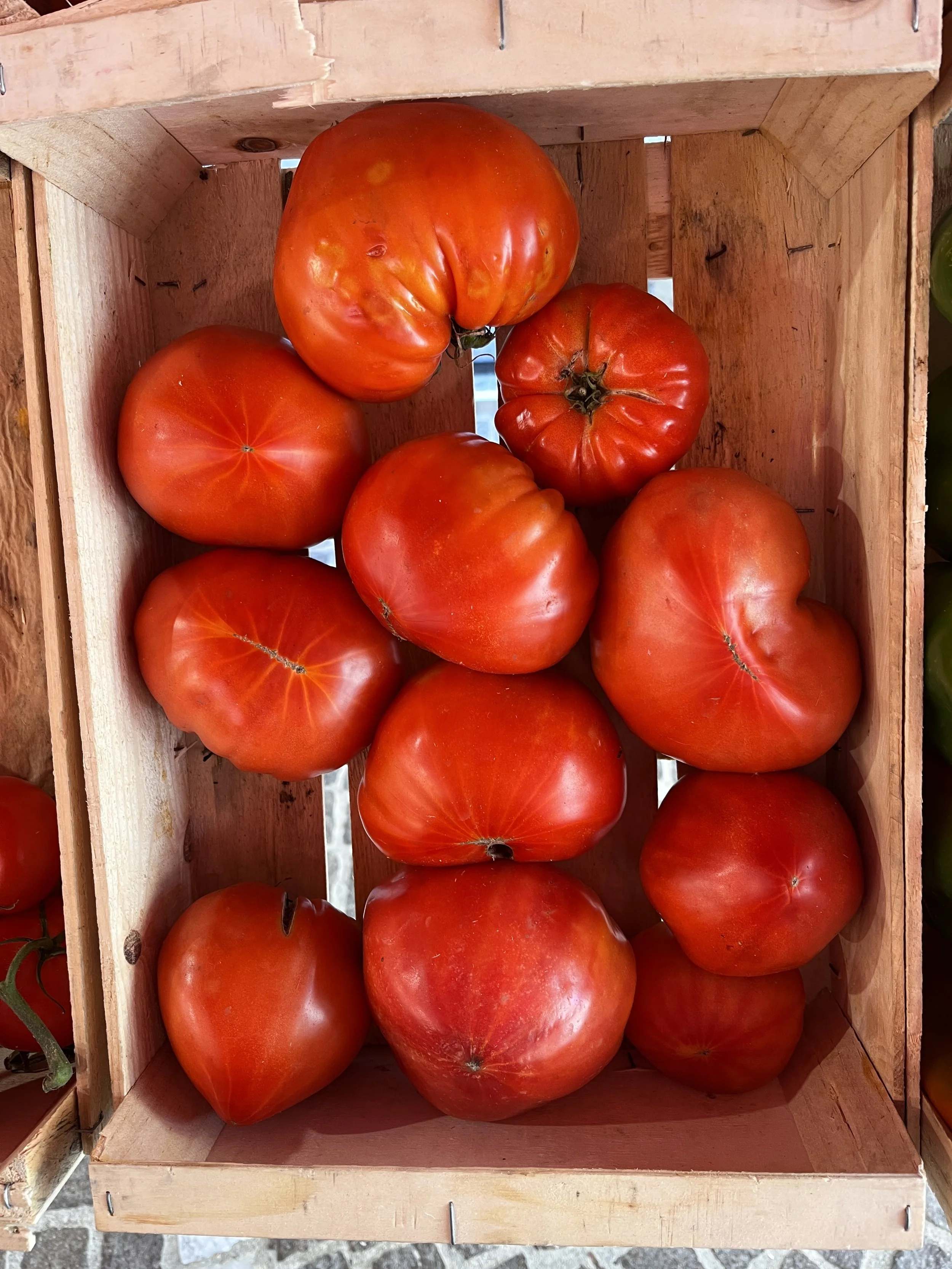
Green peppers are piled beside red ones. Aubergines sit in wooden crates, their skins almost purple black beneath the lights. Long courgettes lean against one another. There are tomatoes everywhere: round ones, ribbed ones, small ones still attached to their vines.
People reach across one another to choose them.
Paper bags open and close.
A hand presses gently against a peach.
Someone lifts a melon to their nose.
For a while, I watch.
We do so much of this without thinking.
We look.
Touch.
Lift.
Smell.
Somehow the body is gathering information all the time.
By the time I leave the market, the tomato is inside a brown paper bag.
Later, I take it out again.
I don't want to do very much to it.
I place it on a board and cut through the middle.
The knife meets the skin first.
A moment of resistance.
Then the flesh gives way.
Inside, the tomato is more complicated than its surface suggested. Chambers of seeds held in something almost translucent. Flesh becoming paler towards the centre. Juice already gathering on the board.
I touch a little with my finger and taste it.
Sweetness comes first.
Then acidity.
A little salt changes it again.
Ayurveda has long interested me for the attention it gives to taste. Its traditional understanding describes six tastes: sweet, sour, salty, bitter, pungent and astringent. I like the invitation within this to notice more closely what is actually present in a mouthful.
A tomato can hold more than one taste at once. This one is sweet and sour, its acidity arriving after the first sweetness.
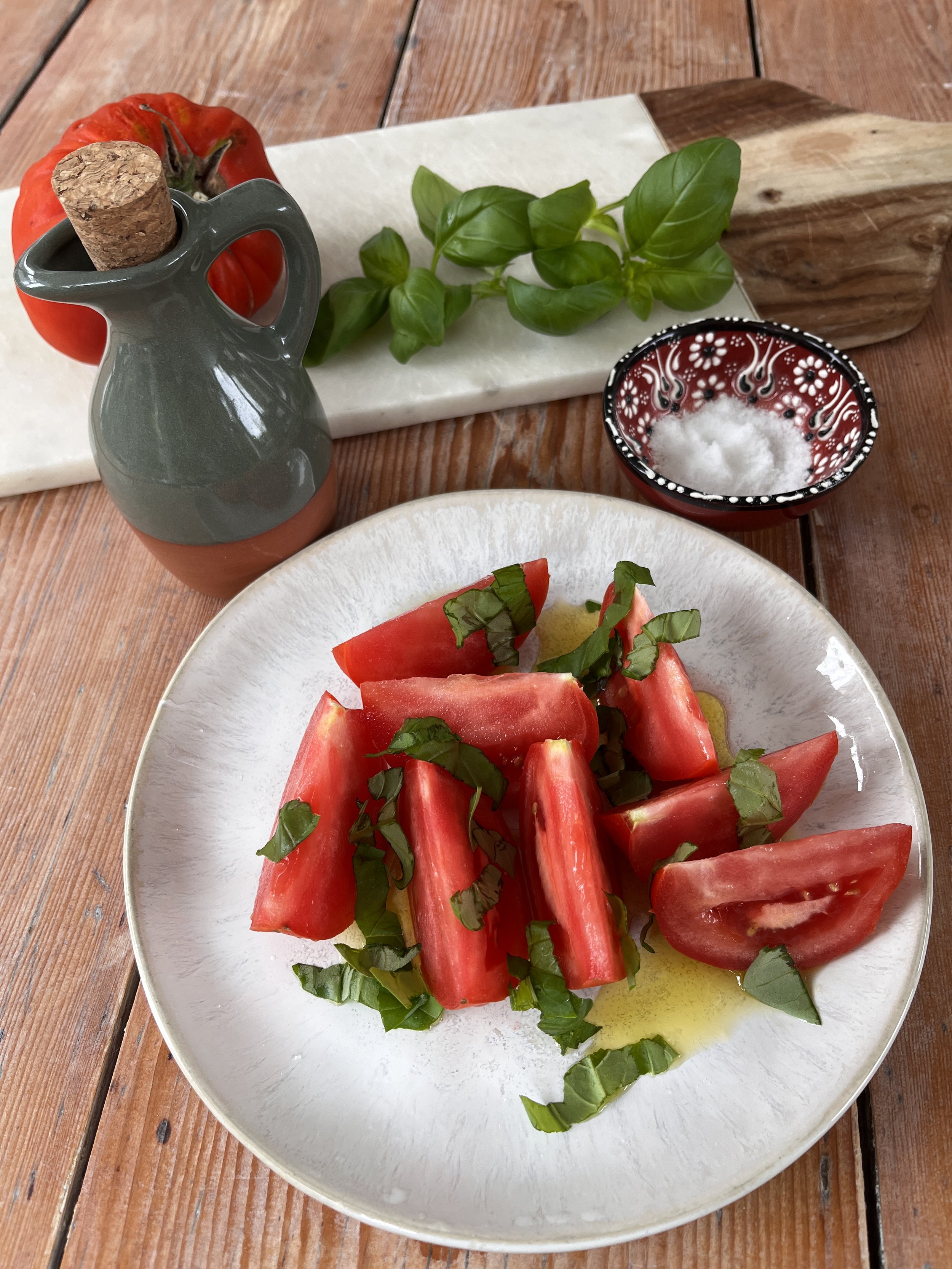
I tear basil between my fingers.
Its scent is immediate, released before the leaves have even reached the plate.
Olive oil catches in the folds of the tomato.
Red.
Green.
Gold.
Nothing needs disguising.
I eat a piece with my fingers.
The tomato is cool now. Softer than it felt at the market. The basil reaches my nose almost at the same moment that the tomato reaches my tongue.
And I realise how incomplete the word taste is for what is happening.
We taste with the nose.
With the eyes.
With the fingertips.
With the small sound a ripe tomato makes when a knife passes through its skin.
Even anticipation has a part in it.
I have eaten tomatoes all my life, yet attention can make an ordinary thing unfamiliar again.
That interests me.
Learning to encounter something familiar more completely.
At the end of the meal, a little tomato juice and olive oil remain on the plate.
I tear off a piece of bread.
And wipe the plate clean.
Susanna Syassen