The Body Learns Slowly
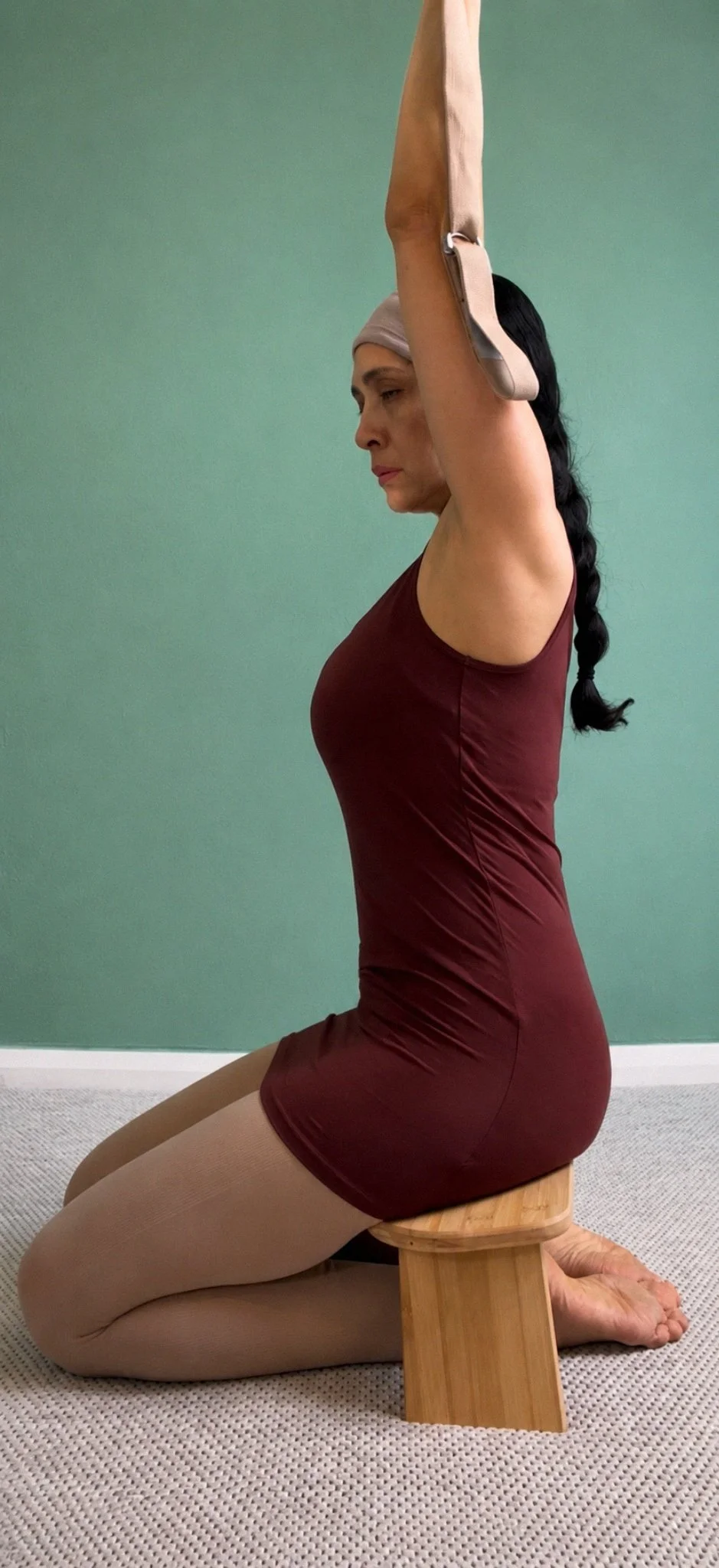
Support changes the experience of opening.
A strap extends the reach of the hands.
A bench alters the angle of the spine.
The body meets the posture through proportion rather than demand.
There is a period in practice where very little appears to change.
The shoulders resist.
The hands stay apart.
The strap remains long between them.
The body protects the places it has learned to hold.
So the work becomes less about forcing movement and more about returning to it. Again and again. A few breaths. A small adjustment. The same action repeated over time.
At first, the movement belongs mostly to effort.
The arms lift.
The chest tightens.
The neck compensates.
The breath shortens slightly as the body approaches its edge.
Then gradually, repetition begins to alter the relationship.
The shoulders start to recognise the shape.
The breath remains steadier inside the movement.
The body uses less force to arrive in the same place.
Support changes the experience of opening.
A strap extends the reach of the hands.
A bench alters the angle of the spine.
The body meets the posture through proportion rather than demand.
This is often how practice develops over years.
Through repetition.
Through small returns.
Through movements the body begins to trust.
Outside the practice space, the same principle continues.
Most meaningful changes in life rarely arrive all at once. They gather gradually through rhythm, through contact, through returning to the same places with a slightly different body each time.
The body learns slowly.
And sometimes this is its intelligence.
Susanna Syassen writes on yoga, Ayurveda, and embodied living. She is the author of The Enlightened Earth forthcoming.