Learning to Rest
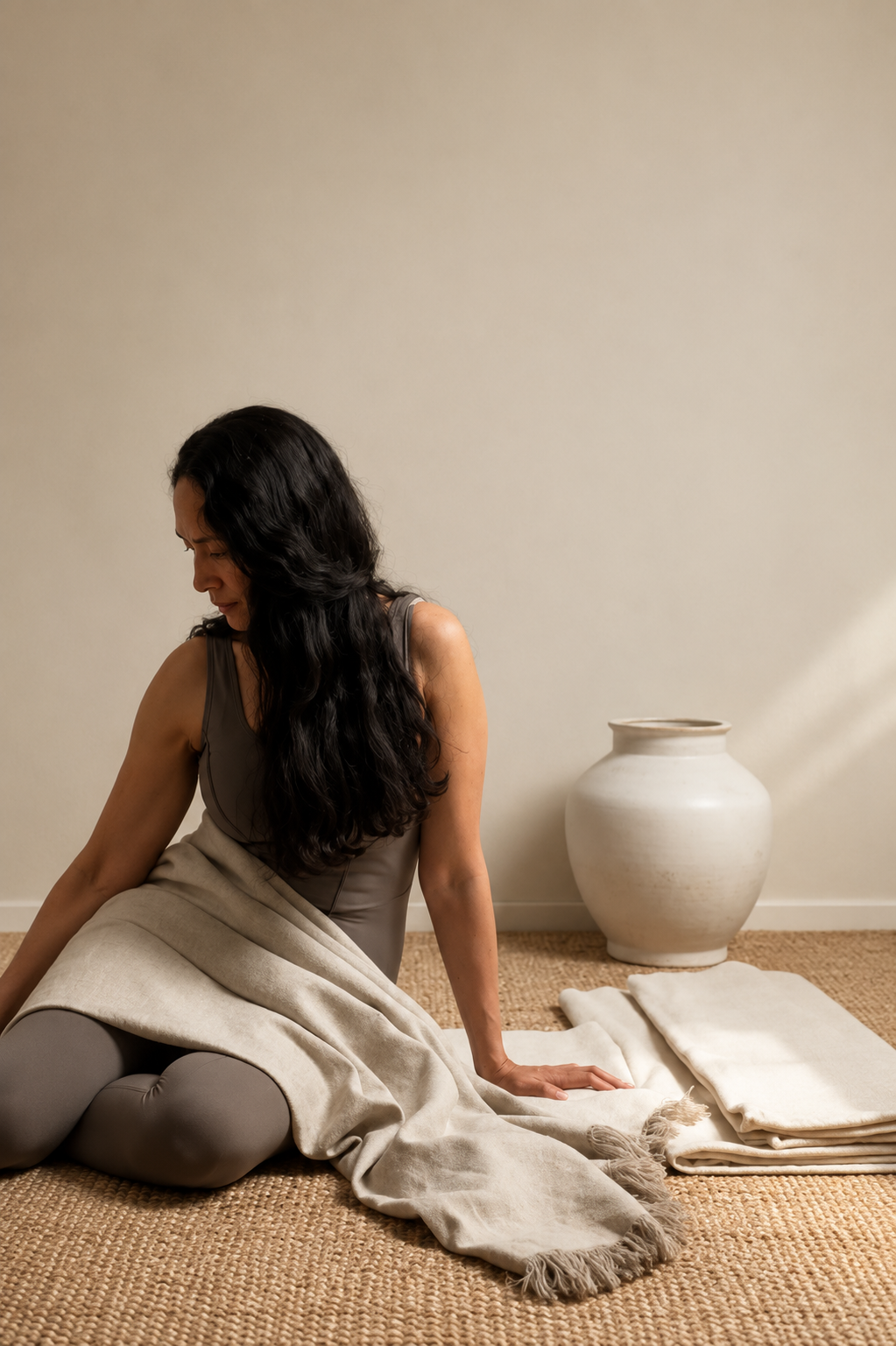
The practice often begins with movement.
A foot steps forward. An arm reaches overhead. The breath follows the shape of the body.
We arrive carrying the momentum of the day. The body is already moving. The mind is already moving.
Then something begins to settle.
Attention returns to the breath. The gaze rests on a single point. The body learns how to remain in one place for a little longer than before.
Even within movement, moments of rest begin to appear.
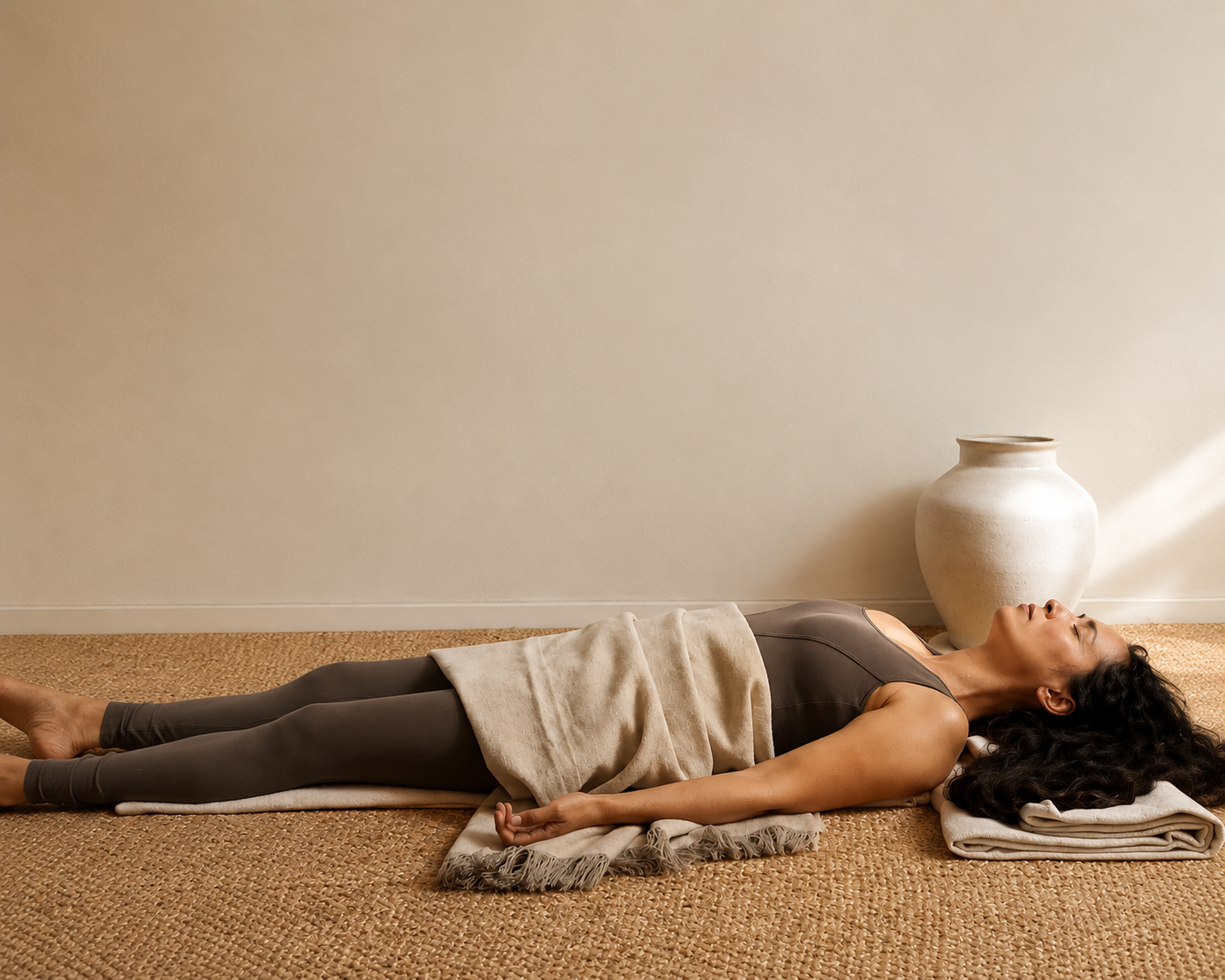
At the end of practice, we lie down in Savasana.
For a few minutes, nothing more is asked of us.
The weight of the body meets the floor. The breath finds its own rhythm. The effort of practice slowly dissolves.
Over time, rest itself becomes familiar.
This is where many practitioners first meet Yoga Nidra.
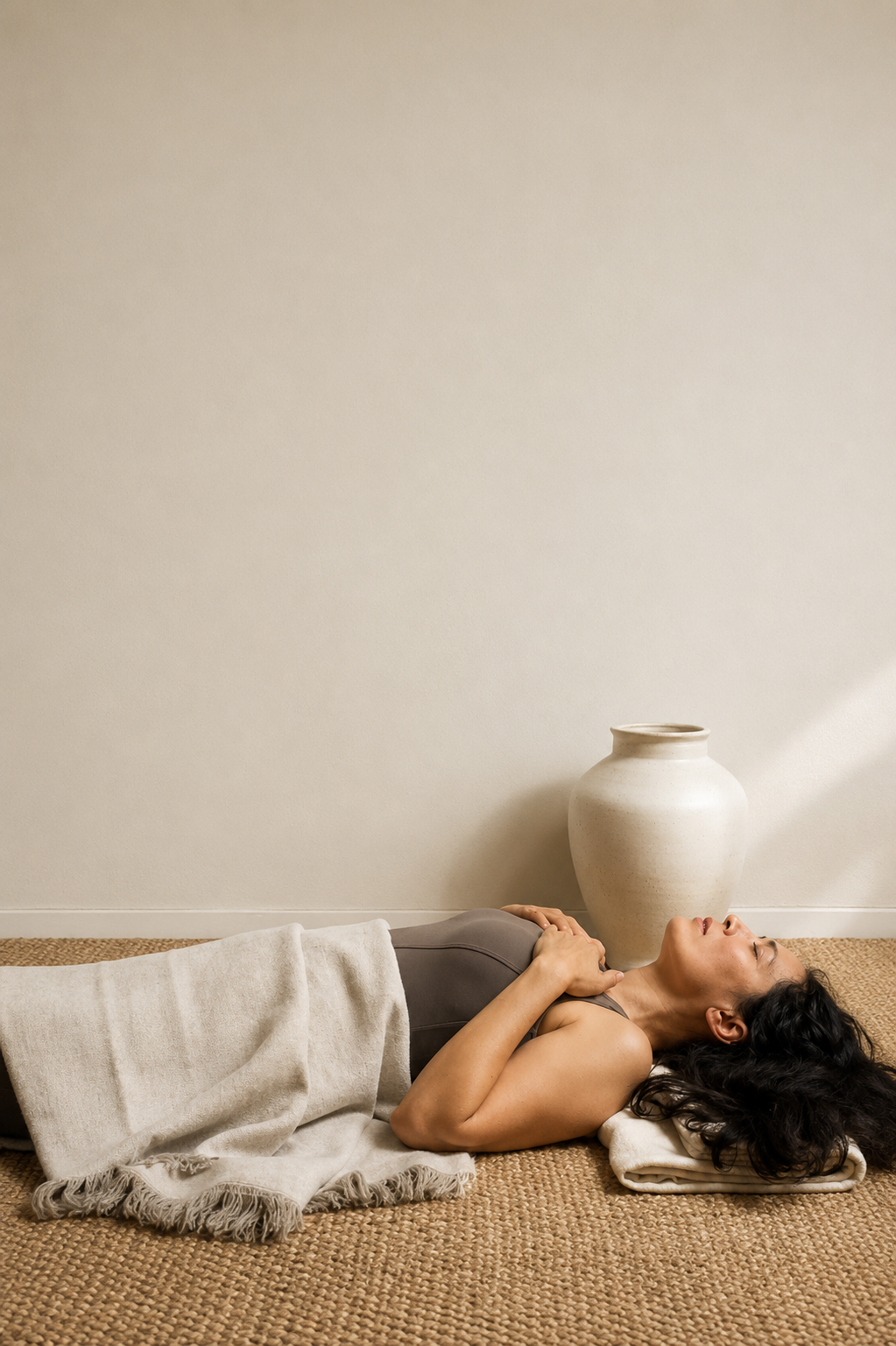
The body remains completely still while awareness stays awake.
Attention moves through the body without needing to change anything. Across the right side. Across the left. Then through the whole body together.
Awareness rests where it is placed.
Perhaps this is why stillness can feel unfamiliar at first.
We spend much of life moving towards the next thing, yet here there is nowhere to arrive.
Only the quiet rhythm of breath.
Only the weight of the body resting against the earth.
The practice asks for very little.
Simply to remain.
Over time, the body begins to recognise this place.
Stillness is no longer something that happens at the end of practice.
It becomes part of practice itself.
A few breaths.
A few minutes.
Returning again.
Rest was never separate from yoga.
It has always been there, waiting in the space between one breath and the next.
Susanna Syassen